iKnife Collector
The online community of knife collectors, A Knife Family Forged in Steel
Anyone else noticing printed "Damascus" creeping into the collectible side of the hobby?
Been collecting folders and fixed blades for about twelve years now, mostly American made stuff from the mid century on up, and lately I keep running into the same problem at estate sales and swap meets. Printed Damascus. Not just on cheap new imports either. I am starting to see it on knives being sold as collectibles, sometimes with a story attached about how old and rare the blade is.
The frustrating part is that at a glance it can look right, especially if the knife is old enough that the handle wear and patina make everything seem authentic. The pattern just being there makes some sellers assume it was always there.
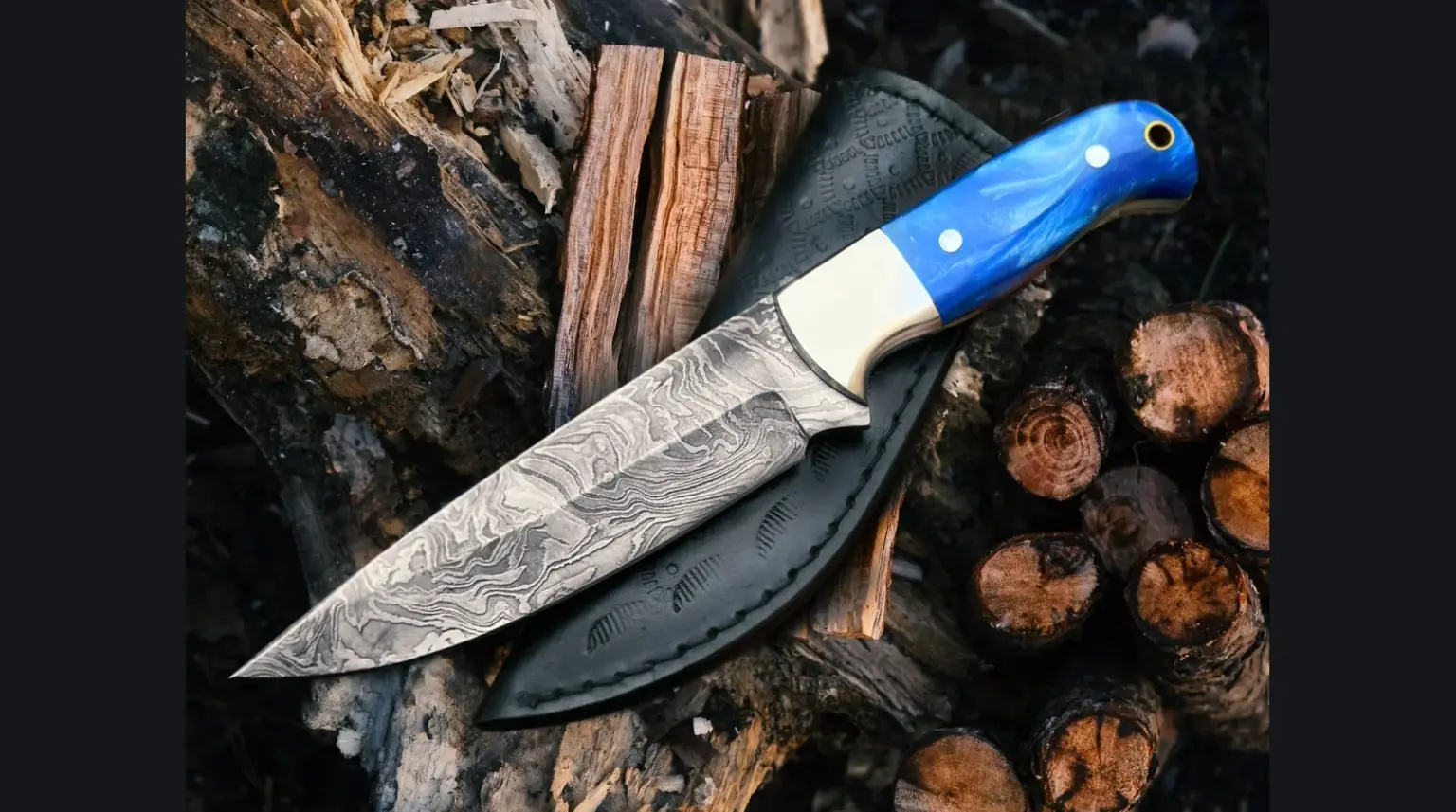 What has been saving me is checking the same three spots every time:
The edge bevel first. Real pattern welded steel shows the layers running down into the sharpened bevel, because the pattern goes through the whole blade. A printed pattern stops dead at the bevel line and leaves a clean bright band along the edge. You can spot it from two feet away once your eye is trained. The spine second. Nobody wastes etchant on the spine of a fake, because the spine never shows in listing photos. Turn the knife over. If the spine is plain steel while the flats are covered in waves, the waves were put on. Both faces last. A forged billet never matches itself face to face. The layers drift as they are worked. If both sides of the blade are mirror images of each other, or the same figure repeats down the length at a fixed interval, that pattern came from a file.
I had one at an estate sale last month, an old looking folder with a beautiful wavy pattern and a price tag to match. Spine was plain, bevel had that telltale bright line, and both faces repeated the same swirl every inch. Seller was an estate liquidator who honestly did not know. He pulled it from the case once I showed him, which I appreciated.
For anyone who wants the full breakdown with photos and the five questions to ask a seller, this has been my go to reference when friends ask me to look at a piece before they buy:
https://blackmambaknives.com/guides/real-vs-fake-damascus/ Curious what the collectors here are seeing. Are you running into printed Damascus being passed off as vintage or collectible pieces? And when you find one, do you tell the seller on the spot, or just walk away? I go back and forth on whether it is even worth the conversation with some sellers.
Replies to This Discussion
-
2021 CalendarPermalink Reply by J.J. Smith III on -
I'm not really a Damascus fan, but I do like a simple Damascus on certain knives. 9
-
KnifeMakerPermalink Reply by black mamba knives on -
I get that. Damascus definitely isn’t for everyone. I think a simpler pattern can look really good when it fits the knife instead of being the main attraction. It also makes the handle and overall shape easier to appreciate. Sometimes less really is more.
J.J. Smith III said:I'm not really a Damascus fan, but I do like a simple Damascus on certain knives. 9
-
Permalink Reply by Lars on
-
I agree...less can be more...except in the sheer quantity of knives. How many do I need? Just one more! :-)
-
KnifeMakerPermalink Reply by black mamba knives on -
Haha, “just one more” is probably the most dangerous sentence in the knife world. 😄 I agree that less can be more, especially when each knife has something different to offer. With printed Damascus becoming more common, I think it’s worth looking beyond the pattern itself. The real difference is in how the steel is made, heat-treated, finished, and how well the pattern holds up through grinding and use. A great-looking pattern is nice, but the craftsmanship underneath it is what makes a knife worth keeping.
Lars said:I agree...less can be more...except in the sheer quantity of knives. How many do I need? Just one more! :-)
whiteriverknives.com
Latest Activity
© 2026 Created by Jan Carter.
Powered by

